

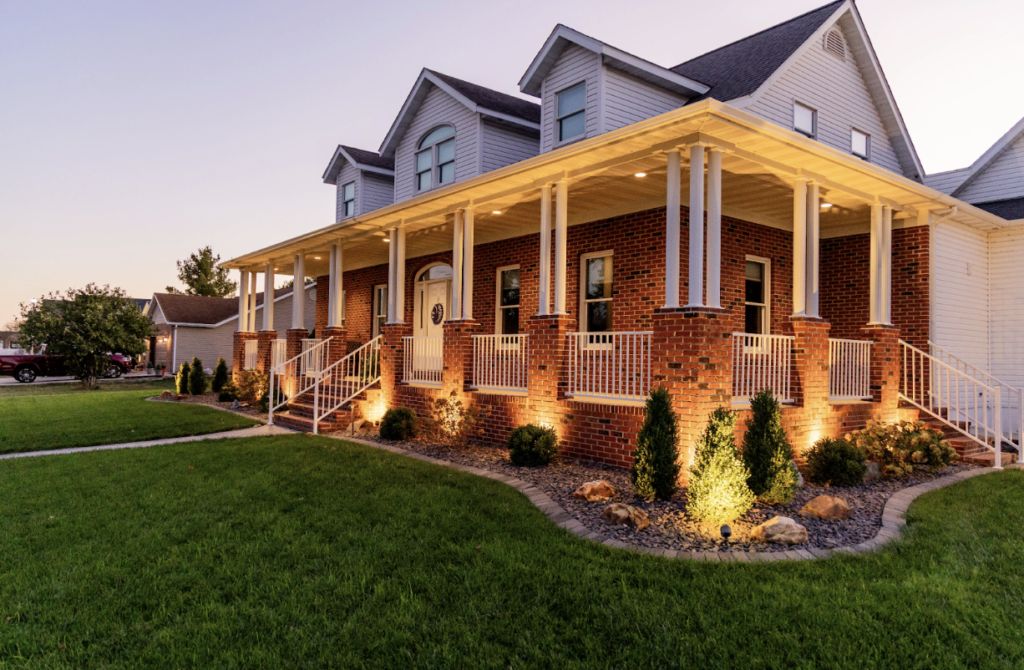
As the sun sets and the noise of the day fades, shadows soften, textures come alive, and, with the right lighting, your backyard transforms into a place of calm and connection. Many people know they want lighting – whether for safety, security, aesthetics, or nighttime usability – but quickly discover there are far more options than expected.
Thoughtful outdoor lighting design balances function, safety, and visual appeal. When properly planned, lighting improves visibility, enhances security, highlights landscape features, and allows your yard to remain usable long after sunset.
With so many fixtures, techniques, and technologies available, the goal of this guide is simple: to demystify landscape lighting in St. Louis homes and help you understand the most common lighting types, installation considerations, and decisions homeowners often face.
Understanding the Types of Outdoor Lighting
Thoughtful outdoor design uses multiple types of lighting to create balance, beauty, and ease after dark. These layers work together to enhance natural features, guide movement, and preserve a peaceful nighttime atmosphere.
Ambient Lighting: Setting the Overall Mood
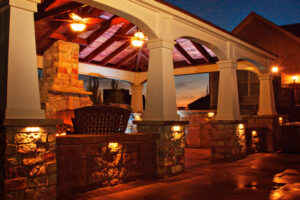
Ambient lighting provides the soft foundational glow for an outdoor space. Rather than flooding an area with brightness, it creates gentle, balanced illumination that keeps patios, seating areas, and gardens visible and comfortable after dark.
Accent Lighting: Highlighting Natural Features
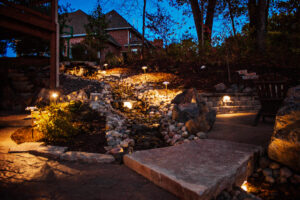
Accent lighting highlights focal points within the landscape. Trees, plantings, stonework, water features, and architectural elements benefit from targeted illumination that adds depth and dimension.
Path Lighting: Guiding Movement with Ease
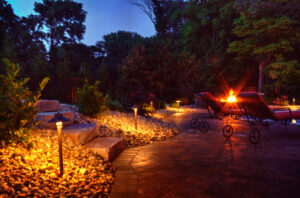
Path lighting improves visibility along walkways and garden paths while maintaining a relaxed atmosphere. Low-level fixtures spaced thoughtfully along routes help people move confidently without harsh brightness.
Step and Grade Lighting: Subtle Support for Safety
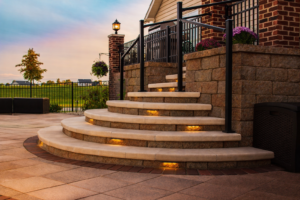
Steps, retaining walls, and elevation changes present natural safety concerns at night. Integrated step and grade lighting improves visibility while remaining visually subtle.
Uplighting: Enhancing Trees and Vertical Elements
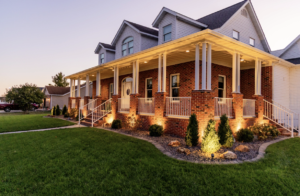
Positioned on the ground, uplighting emphasizes the form and structure of mature trees and tall plantings. When used thoughtfully, it creates a sense of height and presence without overpowering the landscape.
Downlighting: Creating a Natural, Moonlit Feel
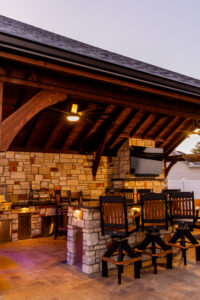
Downlighting places fixtures above the subject, casting light downward to mimic natural moonlight. This produces gentle shadows and a calming, organic feel.
Grazing Light: Revealing Texture and Craftsmanship
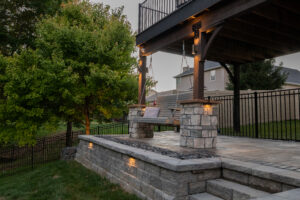
Grazing light is placed close to textured surfaces like stone walls, wood features, or architectural elements. The light skims across the surface, highlighting depth and material quality without adding unnecessary brightness.
What Is Involved in Installing Permanent Outdoor Lighting?
Homeowners often hesitate because installation sounds complex or disruptive. In reality, modern landscape lighting systems are designed to be minimally invasive and highly adaptable.
Will My Yard Need to Be Dug Up?
In most installations, only small, narrow trenches are required to conceal wiring. These are typically shallow and carefully routed to minimize disturbance to turf and plantings. Once complete, affected areas are restored.
Do I Need to Hire an Electrician?
This depends on the system design. Many professional landscape lighting systems operate on low-voltage power supplied by a transformer connected to your home’s electrical system.
While a licensed electrician may be required for certain connections or code requirements, much of the installation is handled by trained lighting professionals.
How Long Does Installation Take?
Timelines vary based on property size and system complexity, but many residential projects are completed within a few days.
How Much Does Outdoor Lighting Cost?
Outdoor lighting investment varies widely based on:
- Property size
- Number of fixtures
- Fixture quality
- Wiring complexity
- Control systems
- Design customization
Smaller, focused systems can be relatively modest, while larger, fully integrated designs represent a greater investment. Importantly, permanent lighting is typically viewed as a long-term enhancement rather than a temporary feature.
What Are My Options for Controlling Outdoor Lighting?
Modern lighting systems offer flexible control options tailored to homeowner preferences.
Common solutions include:
- Timers: Automated scheduling based on time of day
- Photocells: Lights activate at dusk and deactivate at dawn
- Smartphone Controls: Remote operation and scheduling
- Zoned Lighting: Independent control of different areas
- Smart Home Integration: Synchronization with home systems
These technologies allow lighting to remain convenient, efficient, and responsive.
RGBW LED Lighting: Color, Creativity, and Seasonal Versatility
Beyond the warm, natural tones that define everyday landscape lighting, today’s technology opens the door to something more dynamic: full-color illumination that can transform your outdoor space for special occasions, seasons, or simply a change of atmosphere.
What Is RGBW LED Lighting?
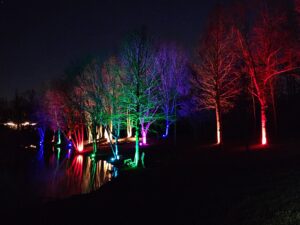
RGBW stands for Red, Green, Blue, and White. Unlike standard LED landscape fixtures that produce a single, fixed color temperature, RGBW fixtures blend these four channels to create virtually any color across the spectrum, while still delivering the clean, warm white light used for everyday illumination.
At Envisioning Green, we install the AMP RGBW G2 ControlPro 800 LED Spotlight, a premium, solid cast brass fixture designed specifically for professional landscape lighting. It offers true-to-color LED output with 10-step dimming and multiple color modes, all controlled by a single remote that operates every RGBW fixture in the system simultaneously.
Holiday Lighting Without the Headaches
One of the most popular reasons people install RGBW lighting is for seasonal and holiday use. Rather than stringing temporary lights each year, permanent RGBW fixtures can shift from your landscape’s everyday warm-white palette to a full holiday color display at the touch of a button. Red and green for Christmas, orange for Halloween, blue and white for Hanukkah, red, white, and blue for Independence Day. The landscape stays beautifully lit year-round, and each season brings something new without any additional installation.
Everyday Beauty, Special Occasion Drama
For most evenings, RGBW fixtures operate exactly like standard landscape lighting, bathing trees, stonework, and plantings in the same soft, natural tones. When the occasion calls for something more, the color capability is there. Dinner parties, outdoor gatherings, or simply a weekend when you want something different, the ability to shift the mood of your landscape lies in the palm of your hand.
Using Light to Highlight Natural Beauty

Letting Nature Lead the Design
The most effective outdoor lighting design begins with observation. Before any fixture is placed, the landscape itself sets the direction. Mature trees, layered plantings, natural stone, and subtle changes in terrain all suggest where light should fall. By responding to what already exists, landscape lighting can feel rooted and organic rather than overly designed.
Revealing Texture and Form
Subtle lighting techniques are key to bringing out the richness of natural materials. Uplighting emphasises the structure of trees and large shrubs, revealing branching patterns and movement in the canopy. When applied softly, it adds presence without drama.
Grazing light, placed close to stone walls, boulders, or textured surfaces, skims across the material to reveal depth and craftsmanship. Bark, leaves, and stone gain dimension as shadows naturally form, allowing the landscape to feel layered and tactile rather than flat.
Creating a Sense of Serenity Through Balance
Embracing Darkness as Part of the Design
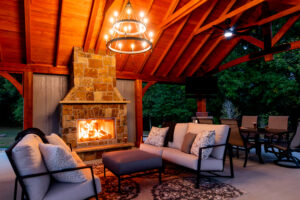
Serene outdoor lighting design understands that darkness is just as important as light. Shadows and unlit areas are not voids—they provide contrast, rhythm, and depth to a landscape. By intentionally leaving parts of a yard, garden, or wooded area in shadow, designers create spaces that feel natural, layered, and dynamic. Shadows guide the eye, giving a sense of flow and allowing the illuminated elements to breathe.
Softer Light for a Calmer Experience
Light that is too bright or harsh can create tension, visual fatigue, or an unnatural feel. In residential landscape lighting, lower levels of illumination reduce glare and visual stress, encouraging relaxation and mindfulness. Soft light transforms outdoor spaces into retreats, inviting evening strolls, quiet conversations, or moments of reflection without the intrusion of artificial intensity.
Avoiding Visual Noise
Over-lighting can fragment a space, drawing attention to fixtures rather than the landscape itself. Too many bright spots compete for focus, leaving a chaotic or artificial impression. By carefully controlling intensity, placement, and layering, lighting enhances the natural rhythm of the landscape.
Guiding Movement While Maintaining Peace
Lighting That Supports Natural Movement
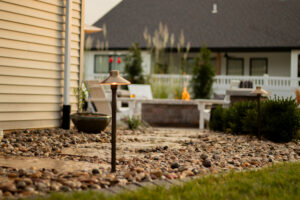
Thoughtful outdoor lighting design provides subtle visual cues that guide people naturally along paths, steps, and transitions. In St. Louis homes, designers often combine pathway and accent lighting to create a visual rhythm. The goal is intuitive movement: People can navigate gardens, patios, and yards almost instinctively, while still experiencing the beauty of the surrounding landscape.
Safety Without Harness
Safety is a core function of landscape lighting, but it doesn’t have to come at the expense of ambiance. Step lights, low-level path lights, and grade lighting improve visibility along stairs, pathways, and changes in terrain while remaining visually soft.
Outdoor Lighting as a Finishing Touch
Bringing the Landscape Together After Dark
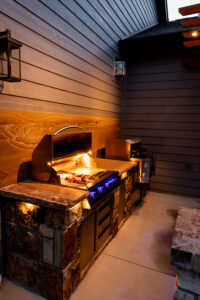
Lighting is often the final element in a landscape, yet it has the power to transform how every feature is perceived. Thoughtful outdoor lighting connects individual elements – trees, plantings, stonework, patios, and pathways – into a cohesive visual experience after sunset. Lighting highlights textures, forms, and natural patterns in a way that feels intentional and effortless, revealing the thought and care behind the landscape.
Extending the Life of Outdoor Spaces
Properly designed lighting allows gardens, patios, decks, and walkways to be enjoyed well into the evening and across seasons. Soft, strategically placed illumination transforms these spaces from purely functional areas into inviting extensions of the home. Whether it’s a summer evening spent under softly glowing trees, a quiet autumn night on a stone terrace, or a winter gathering around subtle patio lighting, landscape lighting ensures that outdoor spaces remain functional, beautiful, and welcoming year-round.
Enhancing Atmosphere Without Stealing Attention
The most successful landscape lighting doesn’t call attention to itself. In outdoor lighting design, light is a gentle companion to the landscape, creating warmth, balance, and serenity. It frames paths and features, reveals textures, and provides a sense of safety without overpowering the natural beauty of the space. For homeowners in St. Louis, this means that evening landscapes feel inviting and complete, not artificial or staged.
Thoughtful Design Makes All the Difference
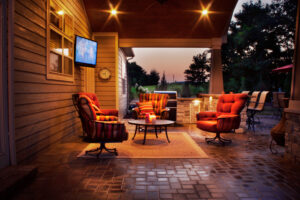
Creating a serene, inviting, and visually rich outdoor space goes beyond choosing fixtures – it requires intentional planning, balance, and expertise. Thoughtful outdoor lighting considers how light interacts with the landscape, highlighting natural beauty, guiding movement, and enhancing the atmosphere without overpowering it.
If you’re ready to bring your outdoor space to life with a design that balances beauty, function, and serenity, reach out to Envisioning Green for a consultation. Our team of experts can help plan and execute a landscape lighting design tailored to your home, turning your yard into a luminous, inviting retreat you’ll enjoy day and night.