
If you’ve lived in the St. Louis area for more than one winter, you know the drill: 70 degrees on Tuesday, snow on Thursday, and a thunderstorm right behind it. Our climate cycles through freezing and thawing so dramatically that it feels like Mother Nature is testing our patience, and our patios.
And because so many homeowners have seen a neighbor’s patio heave, sag, crack, or sprout weeds overnight, a whole set of paver patio myths has taken root in the St. Louis region.
But here’s the truth: Most of the problems homeowners associate with paver patios aren’t caused by the pavers at all. They’re caused by poor installation, DIY shortcuts, or contractors who don’t build to the actual conditions we face here in the Midwest.
At Envisioning Green, we’ve spent years transforming outdated and failing patios into functional, beautiful, long-lasting outdoor spaces—and we’ve seen firsthand what causes issues… and what actually prevents them.
Myth #1: “Paver patios always shift and settle in freeze–thaw climates.”
This is probably the most common belief we hear when we walk into a consultation. Homeowners will say, “My neighbor’s patio is sinking on one side… won’t that happen to mine too?”
Here’s the truth: Pavers don’t fail because of the weather. They fail because of what’s happening under the pavers.
Why patios shift in St. Louis:
Most settling is caused by:
- Not excavating deep enough
- Using the wrong base material (like stone dust or sand alone)
- Lack of compaction
- Water getting trapped under the patio
And in a freeze–thaw region like ours, any trapped water expands and contracts, repeatedly, until the whole patio starts to ripple.

How Envisioning Green solves it:
We build patios like they’re meant to last decades, because they are. That means:
- Excavating to the correct depth based on soil conditions
- Installing a thick, properly compacted aggregate base
- Using industry-leading construction standards
- Completing multiple pre-job walkthroughs to catch issues before build day
Myth #2: “If weeds grow between pavers, the patio must be low quality.”
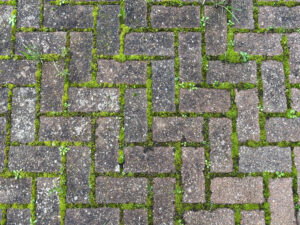
This is such a common fear, and completely understandable. But weeds don’t grow because pavers are flawed, they grow because of DIY sand, poor joint material, or a patio that was never sealed or stabilized correctly.
Why weeds actually appear:
- Cheap sand washes away
- No polymeric stabilization
- Edges weren’t secured (which lets debris creep in)
- Debris settling between pavers
What we do instead:
We use professional-grade joint stabilization products and proven installation methods that lock everything in place. That’s part of our commitment to the pursuit of perfect execution, and it’s why our patios look crisp, clean, and professionally finished year after year.
A properly installed patio should be low maintenance, not a weekend chore.
Myth #3: “Concrete slabs last longer than pavers in St. Louis weather.”
If you’ve ever seen a cracked driveway or sidewalk (so… everyone in St. Louis), then you already know concrete does not love our climate.
Concrete is rigid. Our climate is not.
When the ground expands and contracts, concrete has no flexibility—so it cracks. Pavers, on the other hand, are part of a flexible system. They move with the ground, not against it.
Why pavers outperform concrete here:
- Individual pavers can shift slightly without breaking
- If a utility line needs repair, a section can be lifted and replaced
- Repairs are easy and virtually invisible

And if you’re planning a backyard transformation in the $50k–$100k range, selecting a material that will adapt to seasonal movement is essential. Pavers are engineered for exactly that, which is why we trust them for nearly every project.
Myth #4: “Drainage problems only happen in older backyards.”
This myth persists because many homeowners assume drainage issues are related to age, not design. The truth? We see drainage problems in every type of property—including homes that are less than 5 years old.
St. Louis drainage realities:
- Improper grading around newer homes
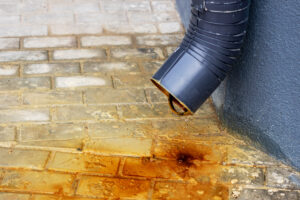
- Downspouts that dump water into the entertainment area
- Flat yards with nowhere for water to go
- Increasing municipal pressure to manage runoff on-site
Where modern permeable paver systems shine
These systems allow water to pass through the patio into a specially engineered base that stores and slowly releases water. It’s a game-changing solution—especially as St. Louis trends toward Chicago-style regulations requiring homeowners to capture more runoff onsite.
Permeable pavers aren’t just smart. They’re future-proof.
Myth #5: “All patio installers are the same.”
If we could wave a wand and dispel one myth forever, it would be this one. Because almost every fear homeowners share with us traces back to a bad experience with a previous contractor:
- Ghosting
- Poor communication
- Sticker shock
- Messy job sites
- Unexpected change orders
- Projects dragging on
You deserve better.
How Envisioning Green does things differently:
- Clear, transparent communication from day one
- On-site consultations to understand vision and budget
- High-end 3D designs before breaking ground
- Thorough pre-job walkthroughs
- A dedicated project manager overseeing every detail
- Permitting & HOA guidance
- A workmanship warranty backed by real accountability
Ready for an Outdoor Space That Looks Good—and Lasts?
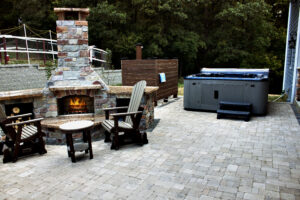
If you’re dreaming about a backyard that brings people together, holds up through every St. Louis season, and becomes the place where memories happen, we’d love to help you build it.
Start with a consultation or if you’re unsure what an outdoor project like this typically costs, our Budget Calculator can help you understand realistic investment ranges before taking the next step.