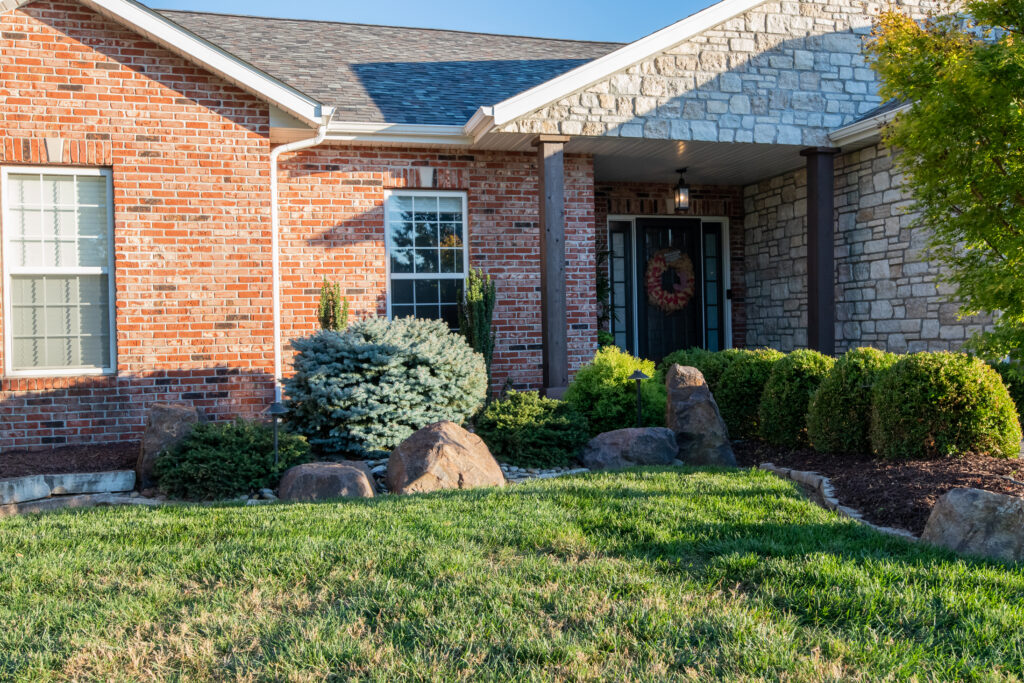
If you live in the Midwest, you already know this truth: our landscapes work hard.
Between hot, humid summers, sudden downpours, freezing winters, and those relentless freeze–thaw cycles, outdoor spaces here don’t get an easy ride. That’s why “low-maintenance landscaping” in the Midwest isn’t about cutting corners or choosing the cheapest option, it’s about smart planning, durable materials, and intentional design from the very beginning.
When done right, a low-maintenance landscape looks better year after year, with less effort from you.
What Makes Landscaping for Midwest Climates Unique
Low-maintenance landscaping means different things depending on where you live. What works beautifully in Arizona or the Carolinas can fail fast in Missouri or Illinois.
Here’s why Midwest landscapes are a category of their own:
Freeze–thaw cycles are unforgiving
When temperatures swing above and below freezing, the ground expands and contracts. If patios, walkways, or retaining walls aren’t built on a properly prepared base, they shift, sink, and crack over time. That’s when “low maintenance” quickly turns into constant repairs.
Heavy rain and clay soil create drainage challenges
Many Midwest properties deal with poor drainage. Water that doesn’t move where it’s supposed to leads to erosion, soggy lawns, and plant failure. A truly low-maintenance landscape has to manage water intentionally — not fight it later.
Seasonal extremes stress plants
Plants here have to handle blazing sun in July and bitter cold in January. Choosing the wrong varieties means more watering, more replacing, and more frustration.
The takeaway? Low-maintenance landscaping in the Midwest has to be designed specifically for this environment.
Design Principles Behind Low-maintenance Landscaping for Midwest Climates
The best low-maintenance landscapes aren’t accidental. They’re the result of thoughtful decisions made early in the design process, long before the first shovel hits the ground.
Start with longevity, not trends
Trendy materials and plant varieties may look great on social media, but if they can’t handle Midwest weather, they’ll cost you time and money later. Long-lasting materials, proven construction methods, and climate-appropriate plants always win in the long run.
Fewer, better elements
Low-maintenance design often means doing less, but doing it better. Instead of overloading a space with dozens of plant types or unnecessary features, successful landscapes focus on clean layouts and purposeful elements that are easy to maintain.
Proper prep is everything
A patio that looks flawless on day one but sinks after two winters wasn’t low maintenance — it was poorly built. The unseen work below the surface (grading, base preparation, drainage) is what determines whether your landscape stays low maintenance for decades.
Hardscaping That Works With Midwest Weather
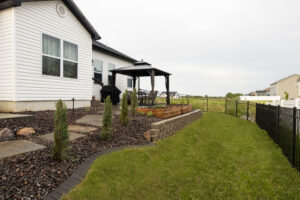
Hardscaping is the backbone of many low-maintenance outdoor spaces, especially in the Midwest.
Patios over decks
Wood decks require regular staining, sealing, and eventual board replacement. While decks absolutely have their place in certain outdoor designs, when the layout and goals of your space allow for it, we typically recommend paver or natural stone patios. They hold up to moisture, temperature swings, and heavy use with far less upkeep over time.
Permeable pavers and smart water management
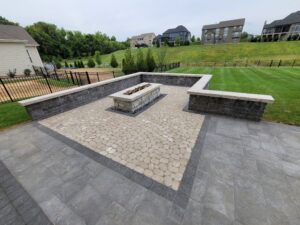
Permeable paver systems allow water to move through the surface instead of pooling or running toward your foundation. This reduces erosion, helps manage runoff, and supports long-term stability — especially important as Midwest rainfall continues to increase.
Quality retaining walls that don’t move
Properly engineered walls with correct drainage and materials prevent soil movement, reduce erosion, and eliminate future repairs.
Plant Selections That Thrive with Minimal Intervention
Low-maintenance landscaping doesn’t mean skipping plants altogether, it means choosing the right ones.
Native and climate-adapted plants
Plants that evolved for Midwest conditions naturally handle local rainfall patterns and temperature swings. They require less watering, fewer replacements, and minimal seasonal fuss.
Intentional groupings
Instead of scattering plants randomly, grouping similar varieties together simplifies watering, pruning, and maintenance. It also creates a more cohesive, polished look throughout the seasons.
Year-round interest with less work
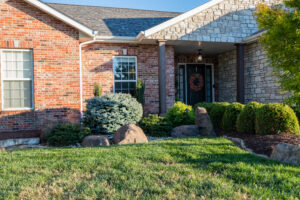
Ornamental grasses, hardy shrubs, and well-chosen perennials provide structure and texture even in winter, so your landscape doesn’t feel empty once the growing season ends.
Smart Drainage = Less Maintenance Over Time
Many maintenance headaches start with water.
Solve drainage first
Standing water, washed-out mulch, and muddy areas are signs of bigger problems. Addressing drainage during the design phase prevents erosion, plant loss, and ongoing fixes.
Blend landscape and hardscape solutions
Drainage solutions don’t have to be ugly. Strategic grading, permeable surfaces, and integrated hardscape elements can manage water while enhancing the overall design.
When water moves where it should, everything else lasts longer.
Common Mistakes Homeowners Make When Aiming for “Low Maintenance”
Even with the best intentions, we see a few mistakes come up again and again:
- Overplanting, which increases pruning, watering, and cleanup
- Choosing materials based on looks alone, not performance
- Ignoring drainage until damage is already visible
- Prioritizing short-term savings over long-term durability
True low maintenance comes from building it right the first time.
Build once. Enjoy for years.
With the right design, materials, and construction, your outdoor space can handle Midwest weather while staying beautiful, functional, and easy to care for year after year. If you’re thinking about upgrading your outdoor space, focus on longevity. Build once, and enjoy it for years to come.
If you’re ready to create an outdoor space that’s built to handle Midwest weather, without constant upkeep, we’d love to help. Explore what’s possible with a thoughtful, low-maintenance design and start the conversation today.